Dim Light Doesn’t Make It a Jazz Bar

Dim Light Doesn’t Make It a Jazz Bar

The other day, during our Chicago blues night, a customer asked me,
“What other jazz bands do you have besides this one?”

I said, “This is blues. We don’t have any jazz bands at the moment.”

She persisted, “Okay… but what other jazz bands do you have on other days…?”

It stayed with me, because it wasn’t an isolated moment.

Many reviews describe Bangkok Mojo as a charming jazz bar or jazz club.

It’s not just us who experience this.
“Yes, we got a bad review from a customer because we didn’t have jazz that particular night — but we don’t call ourselves a jazz bar, some of our customers’ reviews do,” a friend who also owns a live music venue told me the other night.
And the other day, a popular internet portal published a list of the best jazz bars, and many places on it had no dedicated jazz program at all — or were simply live music venues that include jazz among other genres, much like us.

And it’s not limited to Southeast Asia either.
A friend from back home recently asked me, “How is your jazz club doing?”

So I found myself wondering: when did jazz become a synonym for live music… or for music in general?

There is a habit — in everyday talk, casual reviews, travel writing and venue listings — of calling almost any intimate live music room a jazz bar. Some of that may go back to a time when certain venues used “jazz club” to separate themselves from more touristy places with variety bands and background entertainment. Over time, “jazz” became shorthand for a dimly lit, intimate room. And somewhere along the way, the term stuck — often with very little to do with what’s actually being played.

We get why. It’s easy. It tells your friends what kind of place it feels like. Everyone uses it.
But atmosphere is not genre.

And when a venue presenting blues, rockabilly, soul, roots music, classic rock and occasional jazz is simply called a jazz bar, something gets flattened — not just accuracy, but the identity of the music itself.

That is one reason we call Bangkok Mojo a Music Lovers’ Club.
It’s intentional — we gave it a lot of thought. No single genre defines the room.

Some of this confusion is generational. People who grew up on records, FM radio DJs, music magazines like Rolling Stone, Creem and Melody Maker, dedicated music programs like Top of the Pops, and early MTV encountered genres as living traditions with histories, rivalries, crossovers, lineages and distinct looks.

We had shared points of reference. You didn’t just hear a song — you often knew where you first heard it, which movie it was featured in, what the video looked like.
We didn’t have the multitude of sources available now, but we had obsession. For many, it was more than taste — it shaped how you dressed, how you spoke, how you saw the world. A way of life.

“It’s only rock ’n roll, but I like it.”
— The Rolling Stones

Finding something tangible to own from your favourite band — a record, a book, a shirt or a poster — that was joie de vivre. You held on to it like treasure because it meant something, and because you couldn’t just instantly replace it with a click.

Today, music is more available than ever, and you can order merchandise on a multitude of websites. In a way, it’s a gift, but it comes with a cost — you appreciate it less, there’s simply too much of everything all at once, and our attention spans are getting shorter in this sea of information.

“Too much information running through my brain…”
— The Police

And perhaps some people will say they don’t care about genres or bands or background, as long as they like the song. That’s fine too.

But this abundance is also an opportunity.

There has never been a better time to use it as a way into music.

To discover how genres became what they are. How blues fed rock. How gospel fed soul. How dub shaped post-punk. How punk and early hip-hop shared underground energies. How The Rolling Stones and The Doors built their sound on a deep blues obsession. How The Clash pulled in reggae and dub. How Talking Heads opened themselves to funk and African polyrhythms. How jazz fusion borrowed from funk and rock.

That is where listening moves beyond consumption — where the listener becomes part of it.

There are many things you can discover just by listening to a live band and following that thread: What is that song they just played actually about? Who originally wrote it? Which movie was it featured in? What records shaped the artists? Which genres did they borrow from, reject, or bend into something new?

That kind of curiosity changes how you hear music.

Yes, in this flood of information, genres get flattened. And when distinctions blur, everything old-school or improvisational risks being called jazz.

There is no shame in not knowing these distinctions. But there is pleasure in learning them.

A Very Short History of Some Often-Confused Genres

Jazz

Jazz emerged in New Orleans in the late 19th and early 20th centuries from African American musical traditions, blues, ragtime and brass band music. It evolved through major phases — New Orleans, swing, bebop, hard bop, modal jazz and later fusion.

Louis Armstrong, Duke Ellington, Billie Holiday, Charlie Parker, Ella Fitzgerald, Miles Davis, Art Blakey,  — a deep, specific language built on harmony, rhythm and improvisation.

Blues

“The blues had a baby and they named it rock and roll.” — Muddy Waters

Blues grew from African American work songs, spirituals and folk traditions in the American South.

Its emotional vocabulary shaped much of modern music.

Delta blues brought the early form. Chicago electrified it. Jump blues pushed toward rhythm and blues. And blues fed directly into rock ’n’ roll.

Muddy Waters, Howlin’ Wolf, B.B. King,  Etta James, T-Bone Walker, Etta James, Bessie Smith — not a branch of jazz, but one of the roots of modern popular music. 

Rock

Rock grew out of blues, country and rhythm and blues in the 1950s, quickly becoming a broad umbrella — rockabilly, garage, psychedelic, hard rock, punk, post-punk, alternative and metal.

Early figures like Elvis Presley, Chuck Berry and Little Richard helped shape its sound and carry that energy into the mainstream, blending rhythm and blues with country and gospel influences.

From there, rock kept evolving — absorbing influences, splitting into scenes and shaping much of what followed — while its roots remain audible underneath.

Soul

Soul grew from gospel and rhythm and blues, carrying church-rooted vocal intensity into popular music.

Ray Charles, Aretha Franklin, Curtis Mayfield — voice, feeling, phrasing. 

Funk

Funk sharpened the rhythmic focus, placing groove at the center.

James Brown reworked rhythm; The Meters, Sly and the Family Stone, Parliament-Funkadelic, Stevie Wonder and Earth, Wind & Fire each pushed funk in different directions — blending it with soul, rock, psychedelia, jazz and pop while keeping groove at the center.

Disco / Early Electronic

Disco emerged from soul, funk and dance culture in the 1970s, feeding into electronic music.

Donna Summer’s I Feel Love, produced by Giorgio Moroder, replaced traditional instrumentation with sequenced synthesizers — a turning point toward modern electronic sound.
And There Are More

Pop, reggae, country, modern R&B — and countless subgenres, often fusions of two, three or more traditions.

That’s where it gets confusing. Without knowing the main elements — like learning an instrument, a language or painting — it’s hard to hear what’s actually happening. You can’t improvise without notes, write poetry without language, or paint abstract without understanding form.

The same with music. Without foundations, it becomes harder to recognise influences. And then the easiest thing is to call it all jazz.

Why This Matters in a Venue

A true jazz club has a particular identity. A blues room has another. A roots venue, another.

When every room gets labeled jazz, audiences can be misled and other traditions become invisible.

It also reinforces the idea that some genres are worth naming precisely while others can simply be lumped together.

Yes, some places may share a certain atmosphere — dim lights, candles, old posters, small stages, intimate rooms. That “jazz bar” feeling people often talk about. But atmosphere alone does not tell you what kind of music culture a place belongs to.

Usually, the clues are already there if you pay attention.

The language helps: live music venue, blues bar, listening room, music club, live house, roots venue. Posters and schedules usually say it too — genre tags, band descriptions, references, names. Sometimes even the pictures on the walls tell part of the story: which artists are framed, which records are being referenced, which traditions the room grew out of.

And then there are the bands themselves. A group walking on stage in vintage western shirts, boots and hats is probably pointing you somewhere closer to blues, country, rockabilly or Americana than straight-ahead jazz. For a long time, music scenes carried not only distinct sounds, but distinct identities, aesthetics and attitudes around them.

Of course, genres blur and musicians borrow from everywhere. But the clues are often right in front of you.

You just start noticing them once you begin paying attention.

And Ask Questions

There is no shame in asking what you are hearing. That is where listening begins.

At Bangkok Mojo, we are always happy to talk music — and everything around it: films, references, culture, where a groove comes from, how one style fed another, why Chicago blues differs from blues rock, who wrote a song, or where you might have heard it before.

That’s why we go through the extra effort to indicate the genre in all our promos.

That conversation is the reason we opened the bar — to share the love of music, to connect, to find your people, to build a sense of community, and to feel the music the way it’s meant to be felt.

Final Thought

Music keeps opening if you follow it.

One song leads somewhere. Then somewhere else. Then somewhere you didn’t expect.

And suddenly listening turns into discovery.

Maybe that is what being a music lover is. Not collecting labels, but following sounds wherever they lead.

And where you landed is Bangkok Mojo — a place where you’ll find the music for your soul.


The SU Jazz Combo Showcase Returns – Extended Edition

The SU Jazz Combo Showcase Returns – Extended Edition

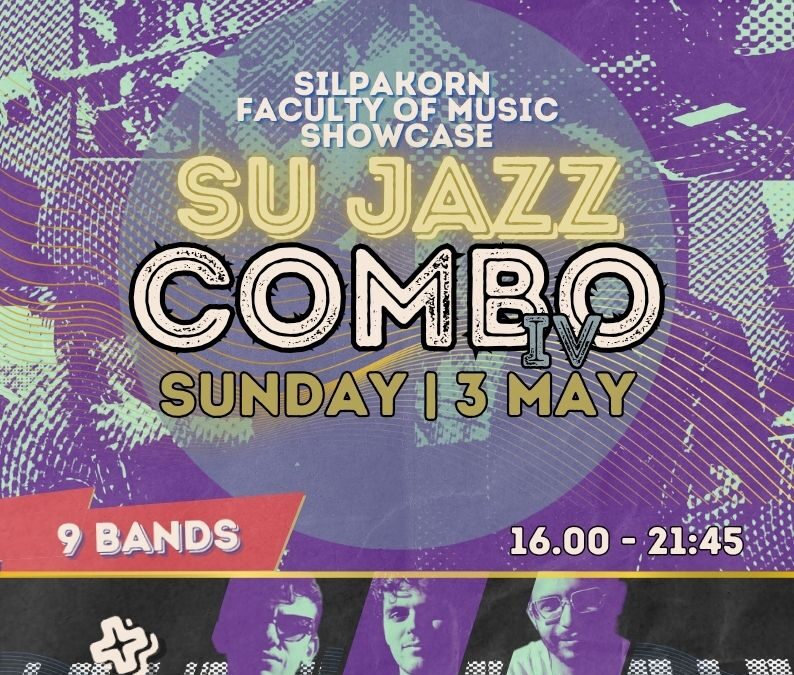
When you start seeing instruments in every corner of the house, you know it’s that time again. Bangkok Mojo is about to fill up with musicians over two Sundays in a row, as the fourth Silpakorn Faculty of Music Showcase — SU Jazz Combo — returns.

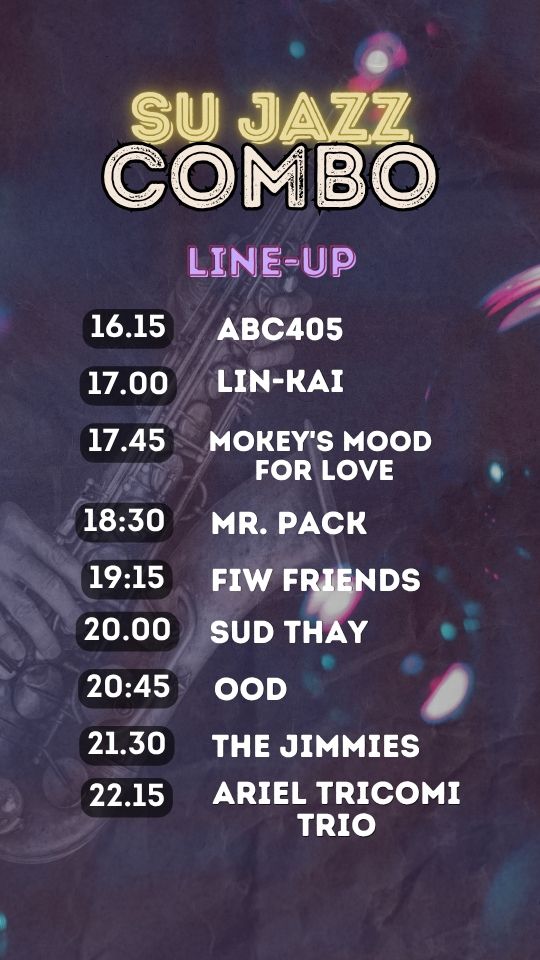
On Sunday, 3 May, nine junior student bands kick things off from 16:00, followed at 22:15 by a special guest set from the Ariel Tricomi Trio. Born in Bologna and currently studying at Siena Jazz Academy, the 22-year-old pianist brings a thoughtful mix of improvisation and fresh takes on jazz standards.

On Sunday, 10 May, two senior bands step in — a more focused set, leaning into the feel of a proper live music room.

What makes these nights more than a student recital is what happens between and after the sets. Ajarn Pisut, Ajarn Boyd, and other faculty members often join in, and by the end, it turns into an open, loose jam — students, teachers, and guests sharing the bandstand.

There’s something special about hearing these sessions unfold as a listener. Arrive early to find a seat and enjoy some of Thailand’s emerging jazz voices.

Support live music with a minimum spend of 300 THB per person.


Da Minot: From the Khasi Hills to Bangkok Mojo — A Celebration of Heritage and Sound

Da Minot: From the Khasi Hills to Bangkok Mojo — A Celebration of Heritage and Sound

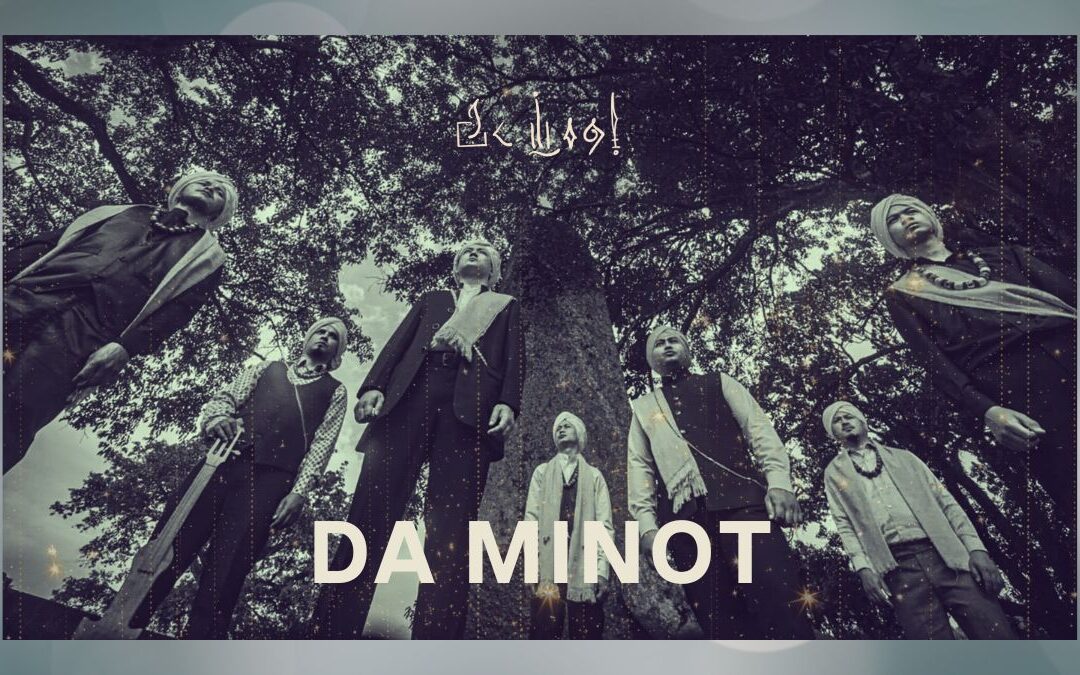
Da Minot Live at Bangkok Mojo

This Thursday, 18 December, Bangkok Mojo welcomes Da Minot for a very special late-night performance, starting at 22:00. The show comes just days after the band’s performance at Wonderfruit Festival in Thailand, giving music lovers in Bangkok a rare opportunity to hear them in a close-up, personal setting.

Who Is Da Minot?

Da Minot is a music collective from Shillong in Meghalaya, Northeast India, formed in 2020 with the purpose of sharing the rhythms, stories, and cultural wisdom of the Khasi and Jaintia hills through music. The word Da Minot translates roughly from Khasi as “to persevere” or “with perseverance”, a name meant to convey resolve and inspiration rather than pursuit of mainstream fame.

Rather than simply recreating folk tunes, their work is built on an ongoing conversation between ancestral sounds and contemporary creativity, grounded in cultural heritage but expressed through original compositions.

Their sound blends traditional indigenous instruments such as the duitara (a local stringed instrument) and bamboo flutes with modern elements like guitar and percussion, creating compositions that feel both rooted and subtly expansive.

A Collective of Musicians

Da Minot’s lineup includes eight core musicians who play a rich variety of instruments — from traditional drums and bamboo flute to modern guitar and bass — allowing them to blend ancestral and modern sonic textures in their work.

Among the core members are:

Hammarsing Kharhmar – guitar, percussion, and one of the main creative forces behind the collective.
Priyo Laloo – vocals and traditional string instrument (duitara).
Dajied Sing Kharkongor – traditional drums and melodic instruments.
Marwan Rymbai – flute and backing vocals.
Swissco Sunn, Phistonwell Khongji, Airailang Kharakor, and Melvyn Kharumnuid — each contributing to the group’s layered rhythms and textures.

This ensemble approach gives Da Minot a fluid and collaborative dynamic, where each player’s contribution shapes the collective sound.

Musical Roots and Cultural Vision

The band’s creative foundation draws inspiration from the Khasi worldview and oral traditions, with songs that echo local stories, landscape, and philosophical themes passed down through generations.

Instead of seeing these traditions as static artifacts, Da Minot treats them as living cultural threads, weaving them into new compositions that feel both ancient and resonant with contemporary listeners.

Bangkok Mojo’s intimate space creates a listening environment that is rare in today’s festival-driven music culture. In a smaller venue, every breath, rhythm, and interplay between musicians becomes palpable. Rather than observing music from a distance, the audience becomes part of the shared moment — hearing nuances, feeling subtleties, and sitting close enough to witness the human connection behind every beat.

For a band like Da Minot, whose music grows out of traditions centered on community and presence, this kind of setting is more than just acoustically responsive — it’s resonant with the spirit of the music itself. Join us at Bangkok Mojo to share this rare moment, feel the energy of the music up close, and take part in an evening that is meant to be lived together, not just heard.

Event Details

Da Minot at Bangkok Mojo
📍 Bangkok Mojo
🗓 Thursday, 18 December
⏰ 22:00
💸 Entrance at the door: ฿400
(All proceeds go directly to the musicians)
🪑 Limited seating available — please arrive at least 15 minutes early to be seated

Sources

[1]: https://wonderfruit.co/directory/da-minot?utm_source=chatgpt.com “Da Minot | Wonderfruit 11-15 December 2025”
[2]: https://www.indiatodayne.in/meghalaya/story/recording-with-the-ancestors-da-minots-songs-of-stone-and-soul-1241428-2025-07-08?utm_source=chatgpt.com “Recording with the ancestors: Da Minot’s songs of stone and soul – Recording with the ancestors: Da Minot’s songs of stone and soul -”
[3]: https://www.timeout.com/bangkok/music/hammarsing-kharhmar-on-heritage-noise-and-the-long-way-back?utm_source=chatgpt.com “Da Minot, the Shillong band bringing Khasi folk to Thailand”

Solar System Band at Bangkok Mojo – From the North, With Soul

Solar System Band at Bangkok Mojo – From the North, With Soul

Photo source: Solar System Band Facebook Page

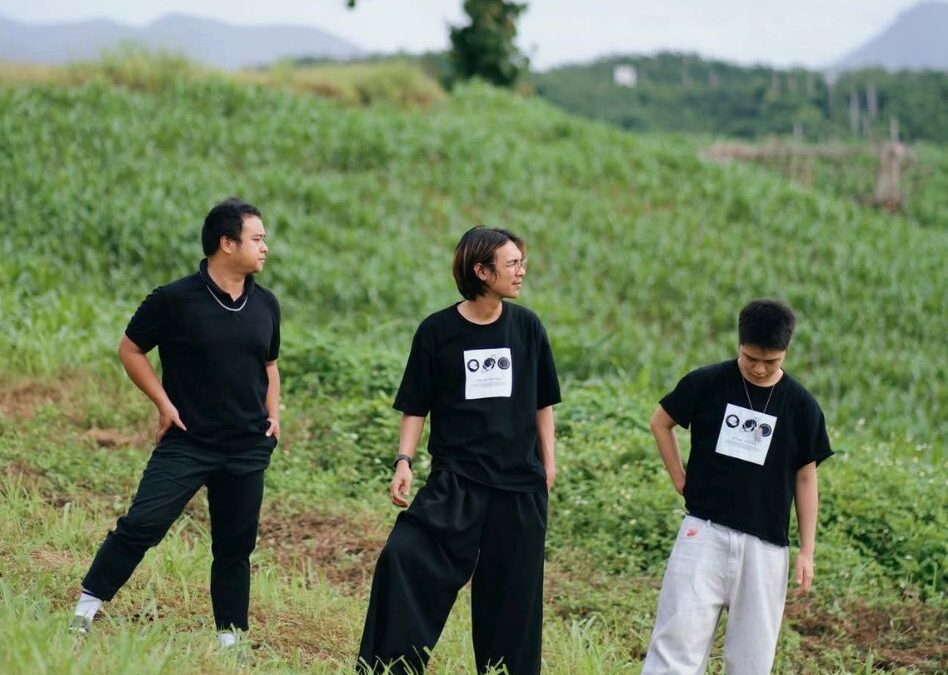
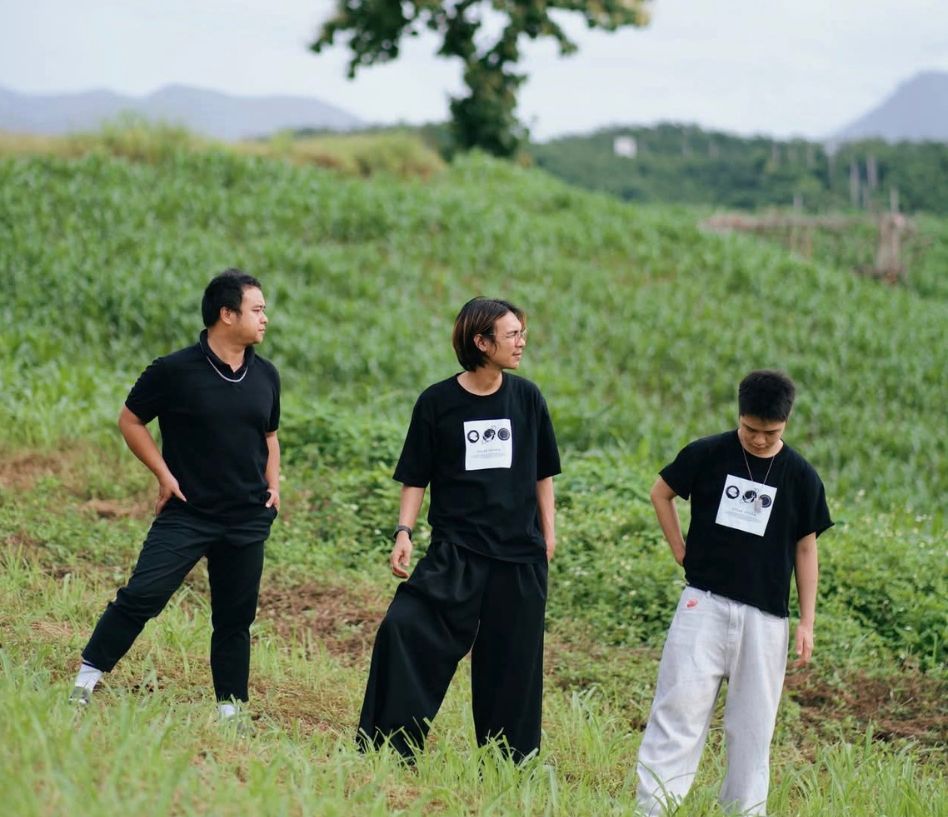
Solar System is an instrumental fusion trio from Chiang Mai whose music carries the spirit of Northern Thailand into every performance. Founded by guitarist Gong (Rasmee Isan Soul) and drummer August—and later joined by saxophonist Zen—the band began as a competition project but quickly transcended those origins, winning first place and discovering a sound worth pursuing far beyond the stage.

Rooted in the idea of Chiang Mai Sound, their compositions weave local atmosphere, Thai identity, and contemporary fusion into something unmistakably their own. With their Northern Thai jazz fusion, they manage to capture both the sunset and sunrise of the region—the warmth, the mist, the mountains, the quiet glow. And though there are only three of them, the sound they create rejuvenates the soul: Zen’s powerful saxophone lines carry touches of 80’s nostalgia, Gong’s guitar offers an enchanting melodic drive, and August’s drums form an awakening pulse that lifts the entire room.

Having performed at festivals from Moscow to Pai, Solar System continues to bring the voice of their small northern city to the world.

Come hang with us and catch a slice of Northern Thailand’s soul in the heart of Bangkok.

Mozart at Mojo by Pro Musica

Mozart at Mojo by Pro Musica

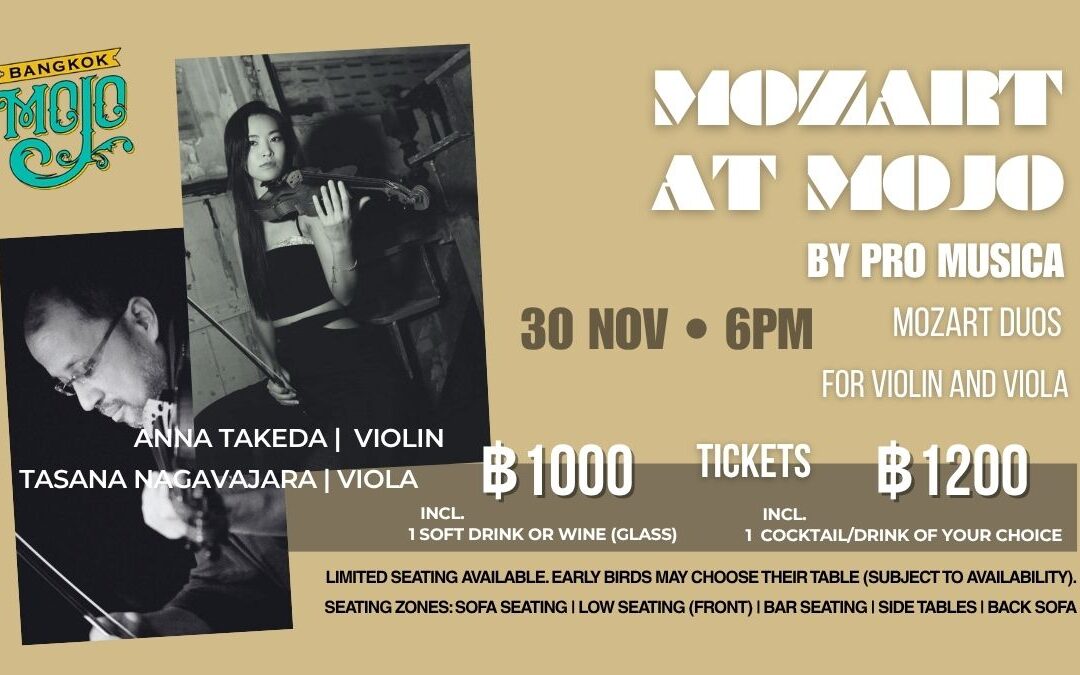
Bangkok Mojo is thrilled to present a special event with Pro Musica, celebrating the timeless brilliance of Wolfgang Amadeus Mozart in our intimate venue.

The concert features Thai violinist and violist Tasana Nagavajara, who has performed across five continents with legendary artists such as Lord Yehudi Menuhin and in prestigious halls including Musikvereinsaal and Konzerthaus Vienna, Barbican Centre and Cadogan Hall London, and Suntory Hall Tokyo. Tasana is also the artistic director of Pro Musica and a founding member of Silpakorn University’s Faculty of Music.

Joining him is Thai–Japanese violinist Anna Takeda, whose international career includes performances with the London Symphony Orchestra, Royal Stockholm Philharmonic, and numerous solo appearances worldwide.

Mozart’s music remains beloved because of its melody, clarity, and universality — simple yet full of clever surprises that delight audiences across generations.

Experience this magical evening with world-class musicians in the unique atmosphere of Bangkok Mojo


📅 Date: Sunday, 30 Nov
🕗 Time: 18.00
🎟️ Tickets:
THB 1,000 – includes one soft drink/glass of wine
THB 1,200 – includes one cocktail/drink of your choice
🎵 Limited seating available – early birds get to choose their table
(sofa, low seating in front, bar, side tables, or back sofa)
🎫 E-ticket only
Payment via QR code or bank transfer

For reservations and seating info msg us on: FB/IG or call 0899093529